


“Si, si,” the man insisted, “Salida a la ocho!”
I pushed my doubts to the back of my mind, gave him 1 CUC and stepped up into the cavernous truck, realizing that after all my questions and hesitation, I had no other choice but to believe him that it really would leave at 8am.
He slammed the door and left me all alone.
A couple of times people got on, once a man, then a couple of women, but both times they got off again, and I watched other buses pull out, wondering if I’d been tricked into sitting on this one. I’d been in this situation before (in Asia, not Cuba), waiting hours for my bus to leave while others fill up and depart.
Suddenly I saw the door to the station open, and people ran, I mean ran, to my truck, and within a couple of minutes it was jam-packed full and pulling out of the station. I’m not sure why I had to get on first: was it so that the man could take my 1 CUC instead of the 1 peso that the locals pay? Or was it because technically I’m not allowed to take that kind of bus?
It didn’t matter; I was on my way.
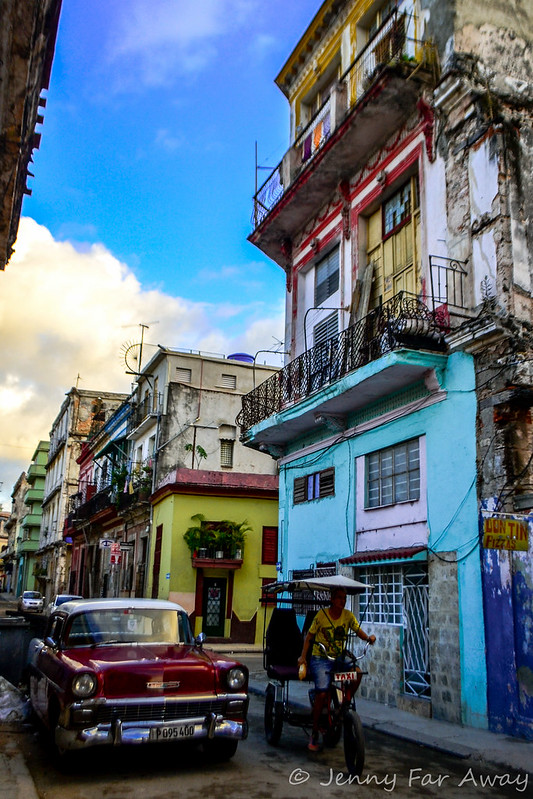
Transportation in Cuba can be complicated. Most locals you ask, especially those working in the tourism industry, will strongly discourage you from taking any kind of cheap public transportation, saying that it’s too crowded and dirty and doesn’t leave on time, and thus you should take the more expensive taxis or Viazul buses. And although tourists are technically not allowed to take public transportation in Cuba, in reality you can; you just have to be patient and persistent about it. I’m going to give you a complete guide to independent travel in Cuba so you can decide for yourself!
In and around the city
My main form of transportation within the cities was my own two feet. With the exception of Havana, most cities in Cuba are small enough that you can just walk, unless you want to visit a sight just out of town.
Máquinas
The cheapest way to get around a city is in a máquina, or collective taxi. These are old American cars (otherwise known as Yank Tanks) that are not in good enough shape to be used as tourist taxis. They may be held together with nothing but wire and maybe duct tape (I’m not sure duct tape is even available in Cuba…) but jolting and rattling along in one of these is a true Havana experience, and they’re cheap and get you where you want to go!
From where I was staying in Vedado to Parque Centrale cost just 10 Cuban pesos (for a breakdown of Cuban money, see Practicalities in Cuba: Queueing, Money, and Internet). Máquinas travel on fixed routes, picking up and dropping off people wherever necessary.
To use one, just stand on a main street heading in the right direction, stand with your hand out, fingers displaying the number of people in your party, and wave at any old car that has a few people inside of it. If it stops, tell the driver where you want to go and the driver will either say yes or no, depending on his route, or if where he’s actually going is near your destination, he might tell you that. If he says yes, get in and then just tell him (say “baja”) when you want to get out (hopefully you know!). Don’t forget to pay him! It’s much cheaper than a taxi, which would probably cost you 4 or 5 CUC for the same ride.
Taxi
In Cuba there are a few types of taxis. There are the modern yellow ones run by Cubataxi, with a sign on top and look just like a typical taxi anywhere. As stated above, one of these would cost you 4-5 CUC to get across Havana. You can just flag one down from the side of the road, and bargain hard.
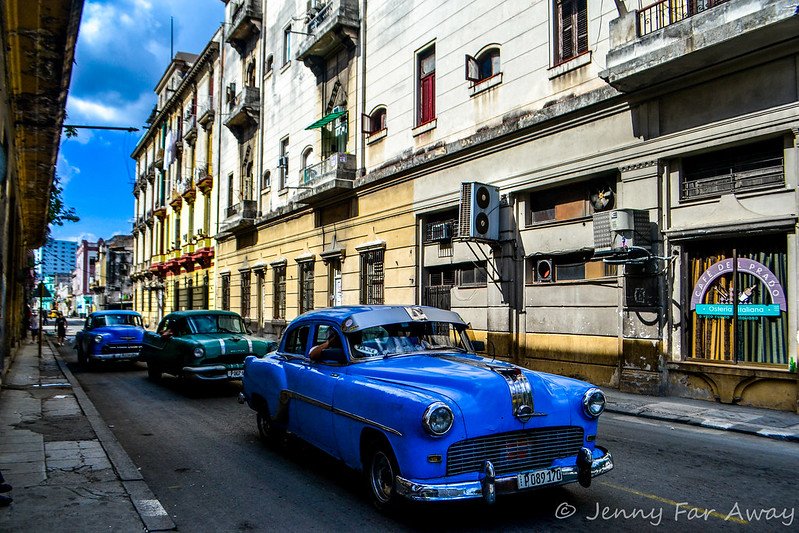
Then there are the tourist taxis. These are old American cars, but they are restored and are absolutely beautiful. You know those images you see of people cruising the streets of Havana in an old American convertible? Yep. Those.
You can get one from just about anywhere in Havana Vieja or Havana Centro, but I don’t remember seeing so many beautiful restored cars in any other city, although I’m sure your casa owner could come up with one if you are able to communicate what you want!
Be prepared to negotiate. I think you might be able to get one for about 15-20 CUC an hour, if you just want to cruise around. If you’re going to just take a joyride it might be best to have an idea of where you want to go if you want to avoid being taken to your driver’s favourite restaurant or shops (ie: where everything’s overpriced and he gets a nice commission). I’m actually not sure how much they charge for just a short trip.
And last you have the private taxis, which usually consists of any car that has an owner who is willing to drive people around. This means you don’t know what kind of car you might get and it probably won’t have anything that says ‘taxi’ but you can be sure that it will be old and rattly! Again, try flagging down any car on the side of the road, or ask at your casa and be prepared to pay more than your trip is worth.

Bici-taxi
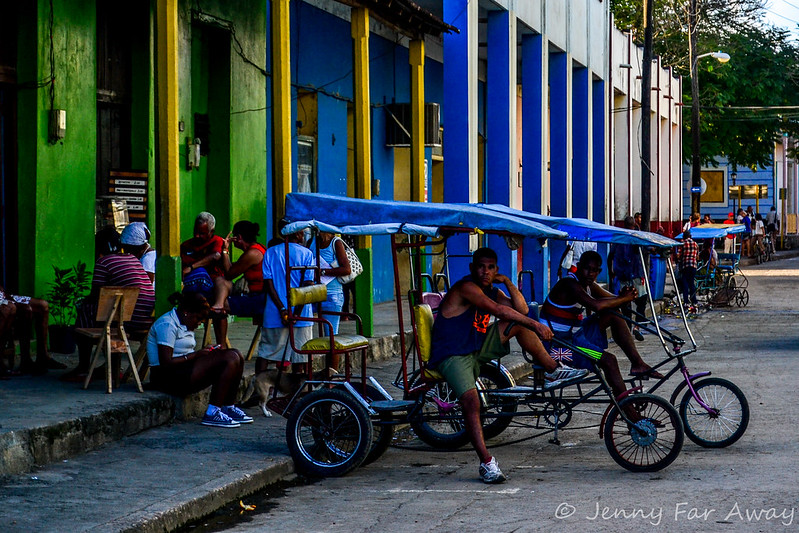
Pedicab, cyclo, cycle rickshaw, whatever you want to call it, the bici-taxi is the Cuban version. Again, you can find them all over Havana Vieja and Havana Centro, and in various other areas. They’ll find you! I only ever took one in Camaguey, when I needed to get to the bus station just out of town. I paid 2 CUC for a 3km ride.
The obvious difference here is that the bici-taxi is obviously slower than a motorized taxi, but that can be good or bad depending on how you look at it!
Public bus or camione (truck)
Public buses can be a bit of a disaster. I had a couple of decent experiences with them, but in Santiago de Cuba I had a terrible time first figuring out what bus number to take (everyone told me something different), then finding the right stop on the right street. And then when I did find the stop? The bus didn’t come. I waited for more than an hour before some enterprising young Cubans brought their empty truck by and picked us up, having passed by earlier and realized that we had all been standing in the rain waiting for the number 12 bus for a VERY long time.
Another time, with the help of a friendly local woman, I successfully got on the right public bus, only to get halfway to my destination and get stuck when I had to change to another bus that just didn’t exist.
And the situation described at the beginning of this post? That was my bus to Laguna Guanaroca. I did get there relatively quickly, but not without a whole lot of confusion and stress on my part.
The trucks can be very uncomfortable. They’re crowded and hot and you may only have the skinniest bar for a seat that is too high to actually sit on anyway, and only a tiny spot for your feet so you can’t actually brace yourself against the bumpiness and jolting of the truck as it accelerates and then hits the brakes. You might find you’re using muscles you didn’t even know existed as you support yourself with just one hand on a bar or a strap. I don’t recommend this for very long journeys.
If you have ok Spanish skills and plenty of time and patience, by all means try to take a public bus or truck. Accept that you may not actually get where you want to go or that it might take you all day to get there. Take it on as an adventure in itself, not as just a means of transportation.

Horse cart
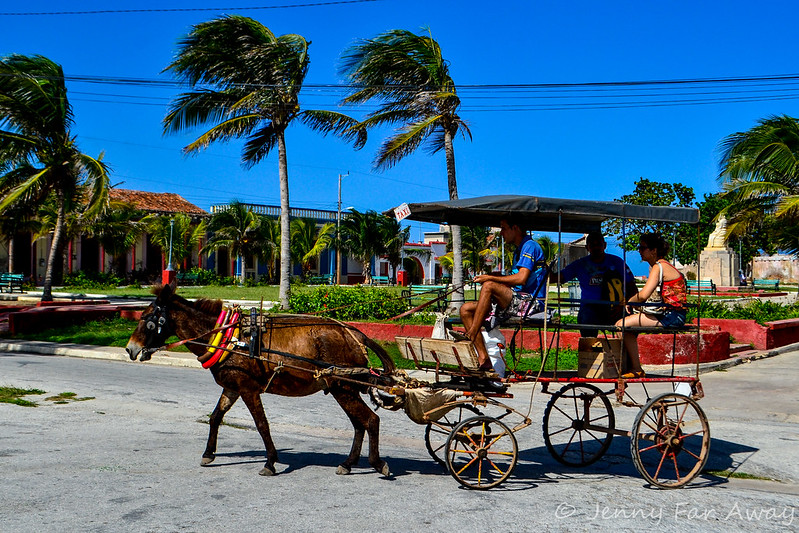
Don’t laugh. This is a perfectly viable option in many places. In particular I saw them a lot in Cienfuegos while walking anywhere outside the centre of town, and they were anxious to pick me up! I don’t know how much a ride on one costs but I’d guess about 1 CUC for a foreigner. Try to get a price in pesos, if possible, as it’ll probably be cheaper that way.
Between cities
Rental car
This would be a great way to see Cuba! That is, if you can afford it. At 70-80 CUC a day, it was out of my price range, especially by myself for five weeks! Watch out for bad roads and fill your gas tank whenever you get the chance.
Hitchhike/Shared car
Everywhere in Cuba there are people standing on the side of the road, trying to flag down a ride. Join them, and while you might get a free ride, you should also be prepared to pay a small amount. You might also be able to get one from somewhere near the bus station but always expect to pay more than the locals do.
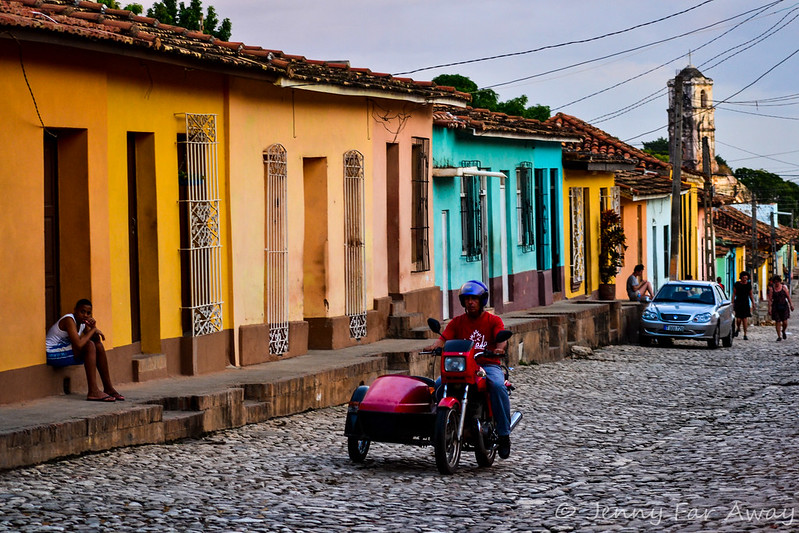
Taxi
Taxis also travel between cities. You can usually arrange this through your casa, and the major advantages are that it’s faster and you get door to door service! No dealing with bus stations. This assumes that you have your next casa booked or at least have an address where you want to go.
How much you pay will depend on how many people you have. If you can fill the car, the price should be around the same as the VIAZUL bus, or at least the same as the bus plus the taxis to and from the station. If not, you’ll pay more, but the convenience might outweigh the extra cost for you. In Havana your casa should be able to sort this out for you at a set price; elsewhere you might have to arrange it yourself.
These taxis are not necessarily more comfortable than the bus though, because you may have a lot of people crammed in along with a lot of luggage. And just like on a bus, you don’t necessarily know who you’re going with. One traveler told me that he ended up in a taxi with three Germans who got drunk and smoked the whole way despite him asking them not to.
You might also end up waiting. My friend and I got a shared taxi from Havana, leaving at 2pm, but we didn’t get picked up until almost 4pm. We were the last ones in, and we realized that while the wait was frustrating, had we been picked up at 2 we would have simply driven around Havana for two hours picking up other people!
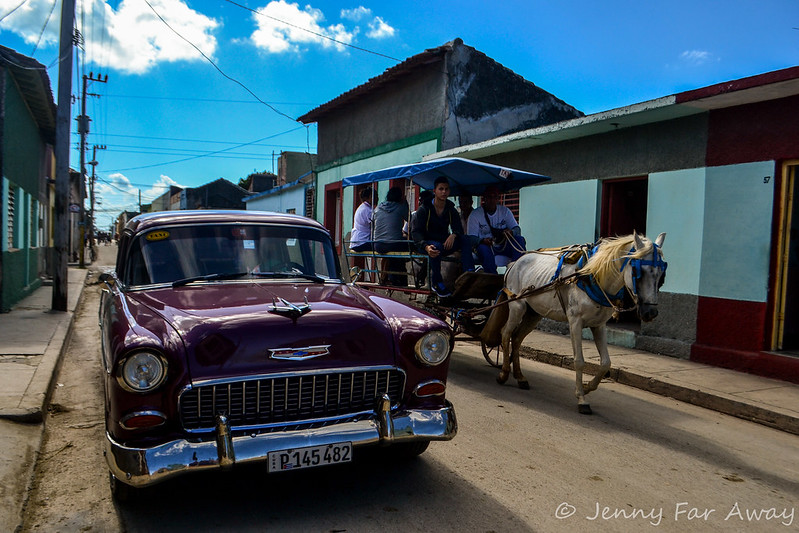
Viazul Bus
Viazul is the tourist bus line, and are technically the only buses foreigners are allowed to take. A few Cubans take them too, but most of Viazul’s customers are tourists. The main problem with Viazul (aside from being a bit on the expensive side for what you get) is that these buses only really hit the main cities in Cuba. If you want to go off the beaten path at all, you’ll have to find another way.
To book a Viazul bus ticket you have to go to the bus station, where there is an office specifically for us foreigners. This office is not often marked, and you may have to ask a couple of people in order to find it! I don’t know why they keep it hidden. Take your passport.
In the high season I highly recommend that you book in advance, because now there are so many people going to Cuba that buses are often full, especially in high-traffic places like Trinidad. You might want to think about booking your bus out as soon as you arrive in a place, especially if the station is far from the centre of town. It’s at least worth checking on the schedule to your next destination so you have that to mull over.
Sometimes when you go to the office you can purchase a ticket immediately for the bus of your choice. In this case the clerk will print out a ticket for you, you pay, and you just have to show up at the station an hour before your bus to check in. They might tell you 30 minutes, but this is Cuba where efficiency isn’t exactly a strong point, so it’s up to you but I’d go earlier.
Other times they’ll just ask you to write your name on a list. Originally I thought that this list meant that you had a booking for a seat, but I had friends who had their name on a list and almost didn’t get tickets because it was full of people who had actual tickets. I’m not sure what the exact criteria is for whether you can buy a ticket or write your name on a list, because either there are empty seats or there aren’t, right?
Someone told me that they have to leave 10 empty seats on every bus for internet bookings, and if those bookings don’t get taken up, then they fill those seats with people from the list. Sometimes people write their names on the list, and then they make other plans and don’t show up for their bus. So if your name is on a list (or even if it isn’t and you just want to go last minute), show up at the station at least an hour before the bus of your choice, and be ready to wait. And think about a Plan B.

When you get to the station you have to check in. This involves you handing over your scrap of paper with a ticket printed on it, so the clerk can scrunch it up, throw it away and print another scrap of paper for you. Oh, wait! I forgot to mention that you will have to queue up for the privilege.
Then you usually have to check your luggage. This is when you give it to a man who writes your destination on a ticket, gives you half, and ties the other half to your bag. Sometimes you do this directly at the bus hold. Other times you have to go in a special room to do it and are required to pay a 0.50 or 1 CUC ‘fee’ for this to happen. I was once told that you don’t have to check your bag, you can just go put it under the bus yourself, but good luck with that. Don’t lose your half of the ticket, because they won’t give your bag back to you without it!
If you book your buses online before your trip it’s a good idea to print out all your confirmations. I met one guy who hadn’t printed his out and although he said it hadn’t been a problem anywhere else, in Bayamo the clerk needed a printout of it and he went through a nightmare where he had to try to connect his iPhone to the office computer so that they could print it. Somehow they managed but it took about an hour. This is why you get to the bus station early.
The bus might be late, especially on the cross-country route between Havana and Santiago de Cuba, where the delays at each stop can add up quite a bit by the time it gets to yours. There’s nothing you can do but wait.
The bus driver will take your ticket from you and this isn’t a problem, but don’t take too long if you get off at the stops, or make sure that someone on the bus will check that you are there before it leaves. The drivers do not count passengers, they just go, and a couple of times I saw people running across a bus station to stop their bus as it was pulling out.
Viazul buses have bathrooms, but they are often locked or out of service. I wouldn’t count on using one, and even if I could, I don’t know if I’d want to. On one bus we had to stop so all the people sitting in the back could get off for some fresh air while they tried to fix the overflowing toilet. That said, you might want to try not to sit near the back of the bus.
When you arrive at your destination, be prepared for the taxi drivers and touts wanting to take you to certain casa particulares for a nice commission (which you will be paying for).

Public buses/camiones (trucks)
You can also try public transportation. Just go to the bus station and start asking about times and destinations. Be persistent, as there’s a good chance they’ll just direct you to the VIAZUL office. You’ll have a much better chance if your destination is somewhere that VIAZUL doesn’t go.
In theory foreigners are not allowed to take public buses, but the reality is that the Cubans want your money and usually a bus station will be more than happy to take a few CUC for looking the other way. It’s a bit tough if you don’t speak Spanish very well, but totally possible.
Train
I actually had it in my head that I was going to take the train for at least one short leg of my journey, but then I never got around to it. Rumour has it that the trains are very slow and times are unreliable, which can turn what would be a three hour bus ride into an eight hour train trip. I still would’ve liked to do it for a bit. Next time, I guess.
For the most current information on train travel in Cuba I would check out The Man in Seat 61.

Airplane
There are domestic flights around different parts of Cuba. Check airlines Cubana, AeroCaribbean, and AeroGaviota. Also have a Plan B, as I met one girl whose flight to Baracoa got re-routed to Santiago de Cuba! She then had to ride seven hours in a truck to get to Baracoa. That doesn’t sound like fun.
Confused yet? There are lots of options to think about, and probably some I haven’t even mentioned here. I even heard of someone traveling a short way by donkey! Once you’re actually in Cuba it’ll be clearer. Just think of it like this: if you’ve got more money than time, take mostly taxis. If you’ve got more time than money, give public transportation a try. And good luck.
Got questions? Feel free to email me or ask me in the comments. And if you’re considering independent travel in Cuba you may want to check out these other posts:
Practicalities in Cuba: Queueing, Money, and Internet




Right where the points are, Traveling is all about the experience starting from the planning and traveling during the trip. I get more out of the planning and the actual visit of seeing the place rather than going for a catered holiday package. Thank you for the tips and making my trip even better with these information about transportation.
I completely agree Andy! Figuring it all out is half the fun! Glad I could help you with your planning. 🙂